


Are Dental Implants Painful? What to Expect
Missing teeth come with plenty of questions. One of the most common ones is a simple, very understandable question – will it hurt? The pain factor is a serious concern for many patients when considering any dental procedure, and the same goes for implants.
The idea of a metal post being placed in the jaw can sound intimidating. The reality, however, is usually far less dramatic than people imagine. Modern implant procedures are carefully planned, performed under local anaesthetic and designed to minimise discomfort.
That said, while the procedure itself is comfortable, some soreness and swelling after surgery is completely normal. Knowing what to expect can make the whole process feel much less daunting – so here it is!
Do Dental Implants Hurt During the Procedure?
The implant procedure itself should not be painful.
Before the dentist begins, the area is numbed using a local anaesthetic, similar to what is used for fillings or other routine dental treatments. Once the anaesthetic takes effect, the gums and surrounding tissue become numb.
During the procedure you may feel:
- Pressure
- Movement
- Vibration from dental instruments
But you should not feel sharp or intense pain.
If you are particularly anxious about dental treatment, sedation options may also be available to help you feel more relaxed throughout the appointment. Many patients later say the experience felt easier than they expected.
What Happens During Dental Implant Surgery?
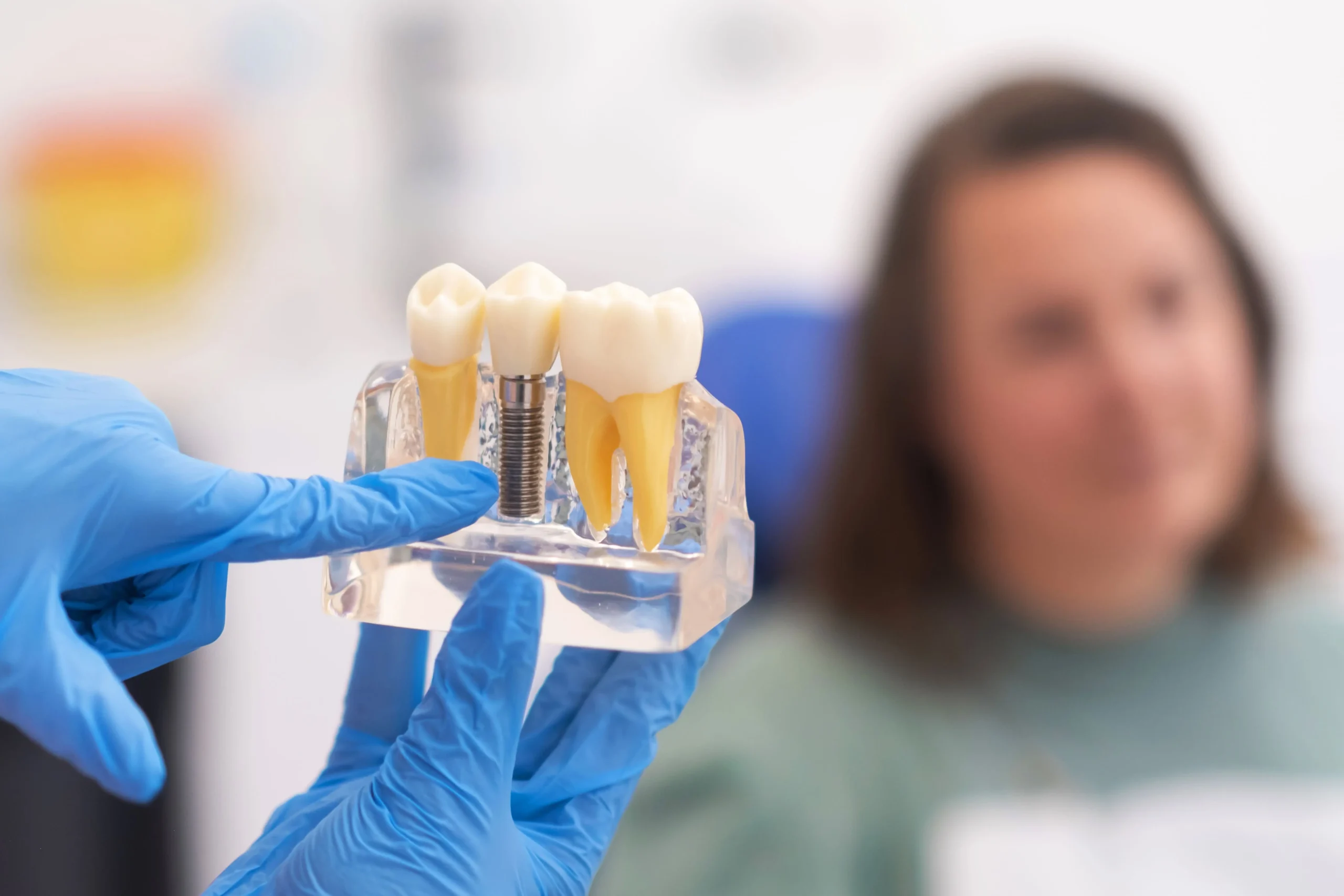
A dental implant works as an artificial tooth root. It is a small titanium post that is placed into the jawbone to support a replacement tooth.
The process usually involves a few simple steps.
- First, the dentist numbs the area to ensure comfort.
- Next, a small opening is made in the gum so the implant can be placed into the jawbone.
- Then, once the implant is positioned, the gum is closed with stitches so the area can heal properly.
For a single implant, the procedure often takes about one to two hours. Because the treatment is carefully planned using imaging and digital scans, the placement is very precise and controlled.
What Does the Pain Feel Like After the Procedure?
This is the stage where patients may experience some discomfort.
Once the anaesthetic wears off, it is normal to feel mild to moderate soreness around the implant site. The area has undergone minor surgery, so the body needs time to heal.
Common post-implant symptoms include:
- Tenderness around the gums
- Mild swelling in the face or jaw
- Minor bruising
- Slight bleeding during the first day
- Sensitivity when chewing
Most people describe the sensation as similar to recovering from a tooth extraction.
The discomfort is usually manageable with over-the-counter pain relief or medication prescribed by your dentist.
How Long Does the Pain Last?
The most noticeable discomfort usually occurs within the first 24 to 72 hours after surgery. During this time, the area may feel sore or swollen, particularly when eating or when touched. After the first few days, symptoms typically begin to improve steadily.
For many patients:
- Day 1-3: Mild swelling and soreness
- Day 3-5: Discomfort begins to settle
- After one week: Most tenderness has significantly improved
The jawbone then continues to heal gradually over several months while the implant bonds with the bone in a process called osseointegration. This stage happens quietly, without the patient knowing and is not painful.
Tips to Reduce Pain and Swelling After Implant Surgery
A few simple steps can make recovery more comfortable. So follow through with these quick tips.
Use a cold compress
Applying an ice pack to the outside of your cheek during the first day can help reduce swelling.
Stick to soft foods
Choose softer foods for the first few days. Soups, yoghurt, eggs, smoothies, and pasta are good options while the area heals.
Avoid chewing on the implant site
Giving the area time to settle can help prevent irritation.
Maintain good oral hygiene
Keeping the mouth clean supports healing and reduces the risk of infection.
Follow your dentist’s aftercare instructions
Every patient is different, so your dentist will provide specific advice tailored to your treatment.
When Should You Be Concerned About Pain?
Some soreness is expected, but severe or worsening pain is not typical.
Contact your dentist if you notice:
- Pain that becomes stronger instead of improving
- Significant swelling after several days
- Persistent bleeding
- Signs of infection such as fever or pus
These issues are uncommon, but it is always best to have them checked promptly.
Are Dental Implants Worth It?
For most patients, the temporary discomfort of the procedure is small compared to the long-term benefits.
Dental implants can restore the ability to chew comfortably, help maintain jawbone health, and provide a replacement tooth that looks and feels natural. Once healed, they function just like your own teeth and can last for many years with proper care.
Considering Dental Implants?
If you are thinking about dental implants and want to understand the process in more detail, a consultation is the best first step. At SDG Dental, our experienced team can assess your oral health, explain the treatment process, and help you feel confident about your options.
Contact SDG Dental today to book your consultation and find out if dental implants are the right solution for restoring your smile.